
3.2 How does our system work?
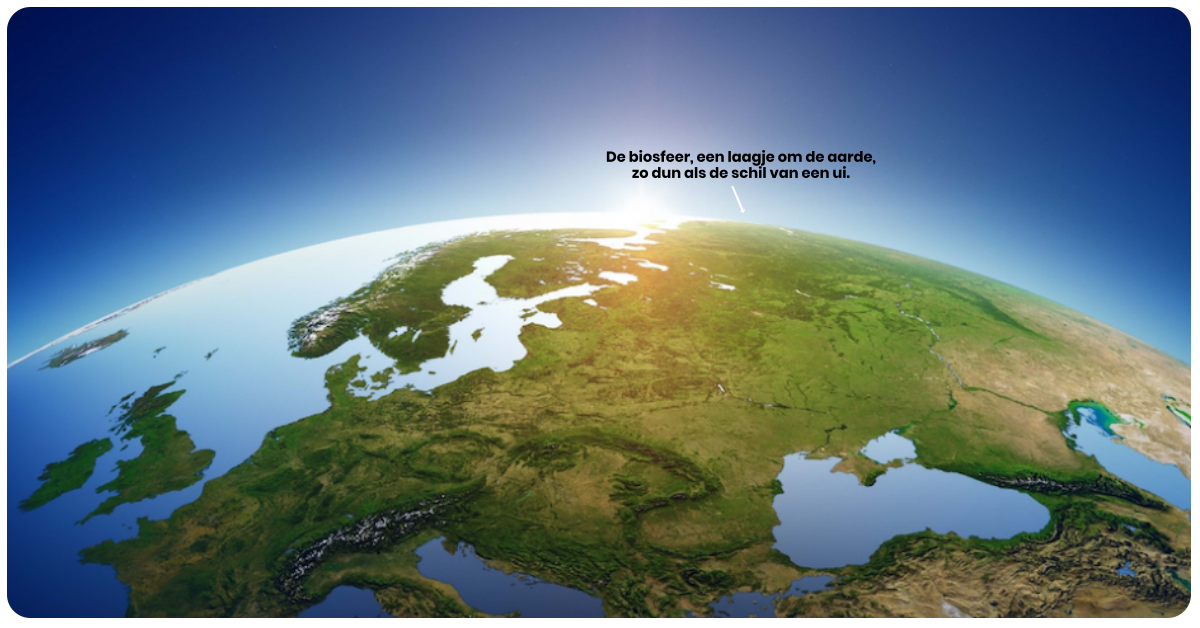
As far as we know, the only place where our way of life is possible is our biosphere. A layer so thin that you could compare it to the skin of an onion. Playing, breathing, eating, dancing, meeting, enjoying—everything takes place within our biosphere. We will now provide a simplified explanation of the system’s key characteristics.
The biosphere, our home
You can compare the biosphere to a snow globe. A thin layer that nothing can pass through. Everything inside the globe stays inside. It only changes shape.
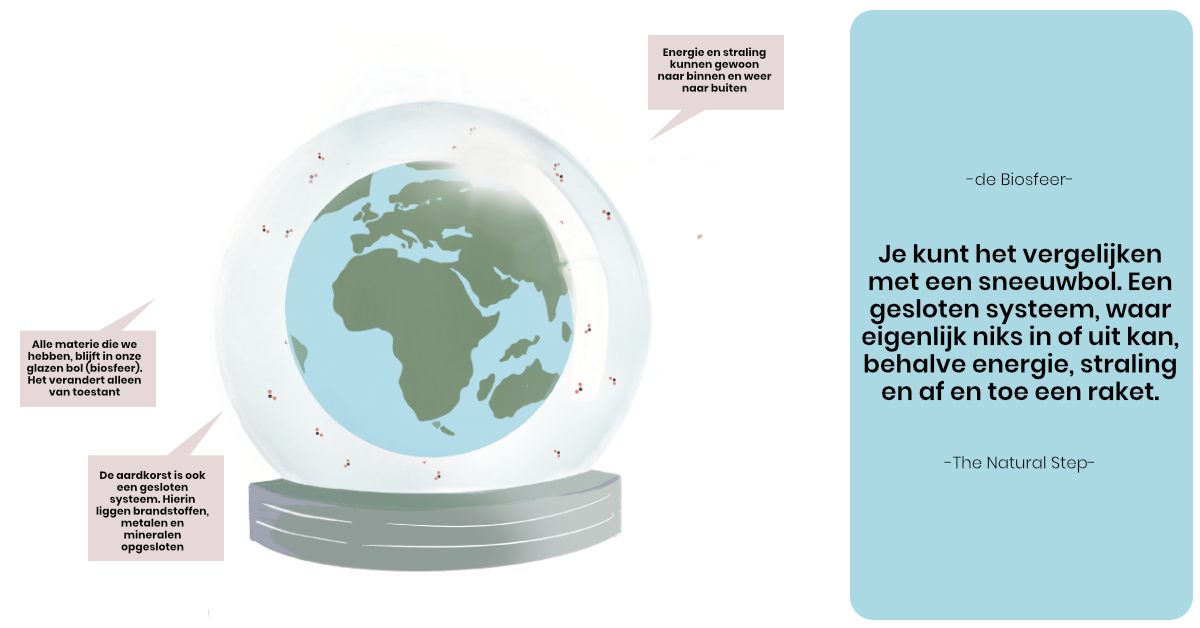
Energy can enter and exit
The biosphere allows energy in the form of sunlight to enter and reflects energy in the form of thermal radiation. Therefore, it can get warmer inside the glass sphere if the solar energy is trapped and the radiation is not fully reflected.
But it is closed to new matter
. Aside from the occasional meteorite or bit of dust that enters, or a satellite we launch that leaves the biosphere, all the matter that was there 4.5 billion years ago is still there today. It has merely changed form. It remains present within our glass sphere at all times.
The Earth’s crust itself is also a closed system
Fossil fuels, minerals, and (heavy) metals have been stored deep within the Earth’s crust for millions of years. Apart from the occasional volcanic eruption here and there, these substances do not simply end up in the biosphere.
Everything on Earth operates in cycles
The reason we have such a beautiful and livable world around us is that everything operates in cycles. All life on Earth follows the laws of thermodynamics. We’ll take a brief look at this.
All energy is conserved; it merely changes form
The first law of thermodynamics states that all energy is conserved; nothing is lost, it merely changes form (e.g., heat is converted into motion).
All matter breaks down and spreads throughout the entire system
The second law of conservation of matter states (among other things) that all matter continuously breaks down into smaller and smaller particles and spreads out over time. We call this ‘entropy’.
Below you can see how this works for plastic.
We live thanks to photosynthesis
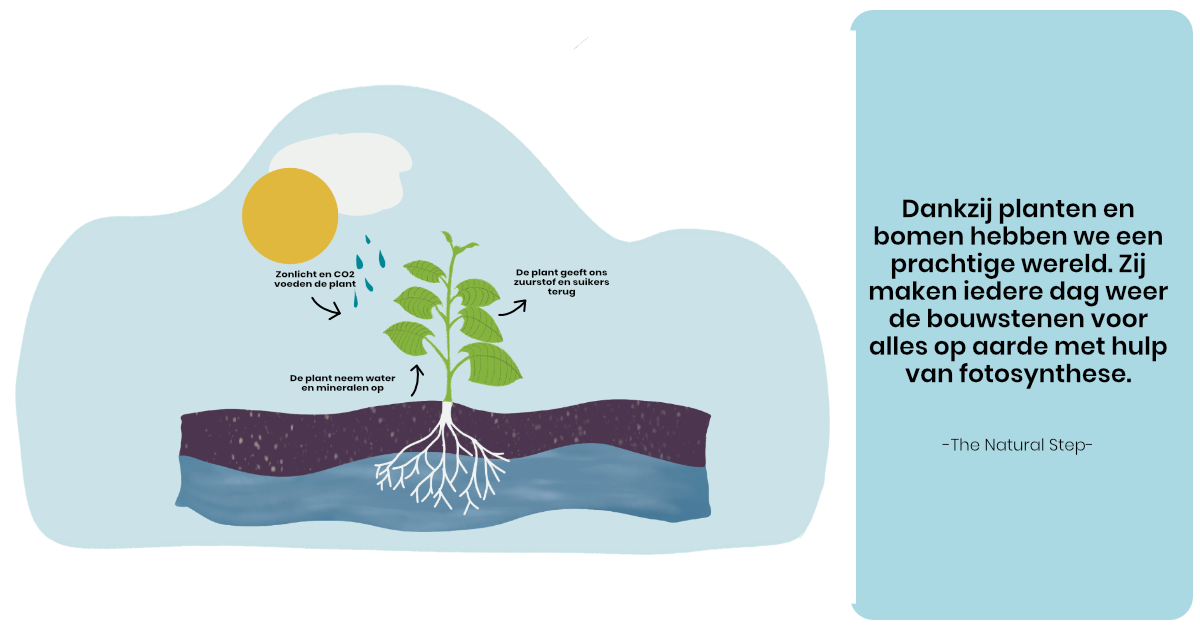
So everything is constantly breaking down into smaller and smaller particles. The reason we aren’t sitting on a mountain of dust, but instead have a beautiful, abundant world around us, is thanks to plants and the process of photosynthesis. Plants take those tiny particles and, with the help of water and sunlight, turn them into oxygen and new building blocks for our lives.
Fast cycle and slow cycle
You may have heard that we need to stop burning fossil fuels because there is too much CO2 in our biosphere. CO2 is like oxygen for plants, so what exactly is the problem? We’ll explain this by looking at the different carbon cycles on our planet. There is a fast carbon cycle and a slow carbon cycle.
Fast carbon cycle
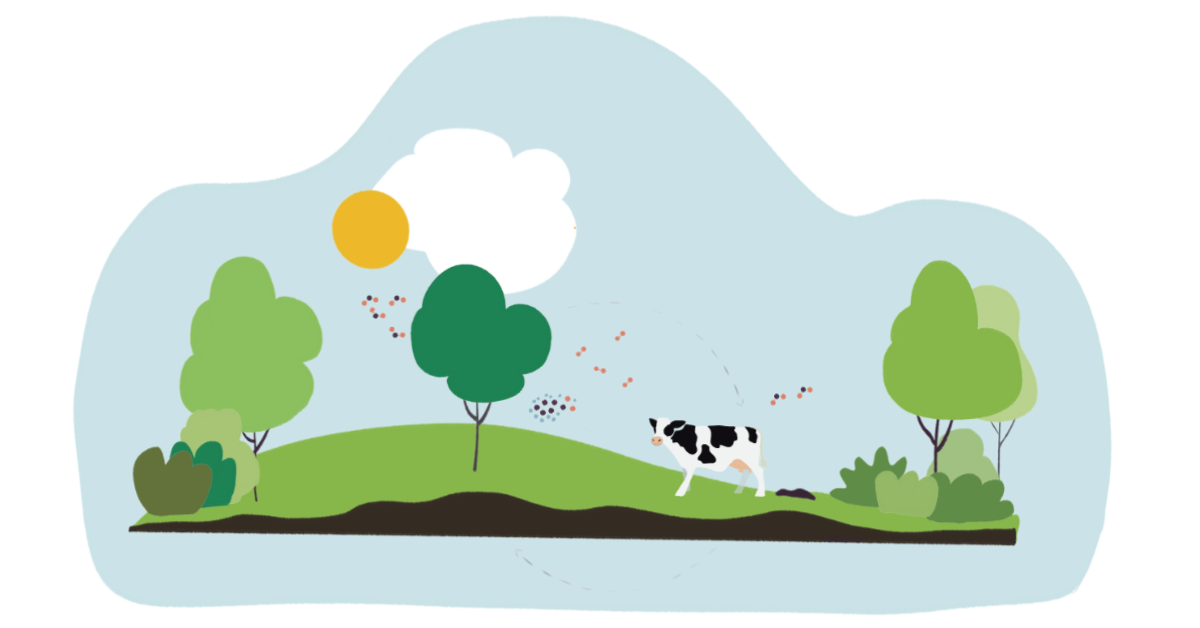
Plants produce oxygen and glucose; humans and animals eat plants, breathe in oxygen, and excrete CO2 and manure. Plants use this for photosynthesis. This is a beautifully balanced cycle. We call this the fast carbon cycle. You breathe every minute and eat every day.
Slow carbon cycle
The Earth’s crust also forms a closed system. Here, we are dealing with a very slow carbon cycle. Through a single volcanic eruption or weathering, stored CO2, minerals, and metals enter the biosphere, and through mineralization and sedimentation, they end up back in the Earth’s crust. This cycle is also perfectly balanced, but takes hundreds to millions of years. Fossil fuels were formed over millions of years and lie deep underground.
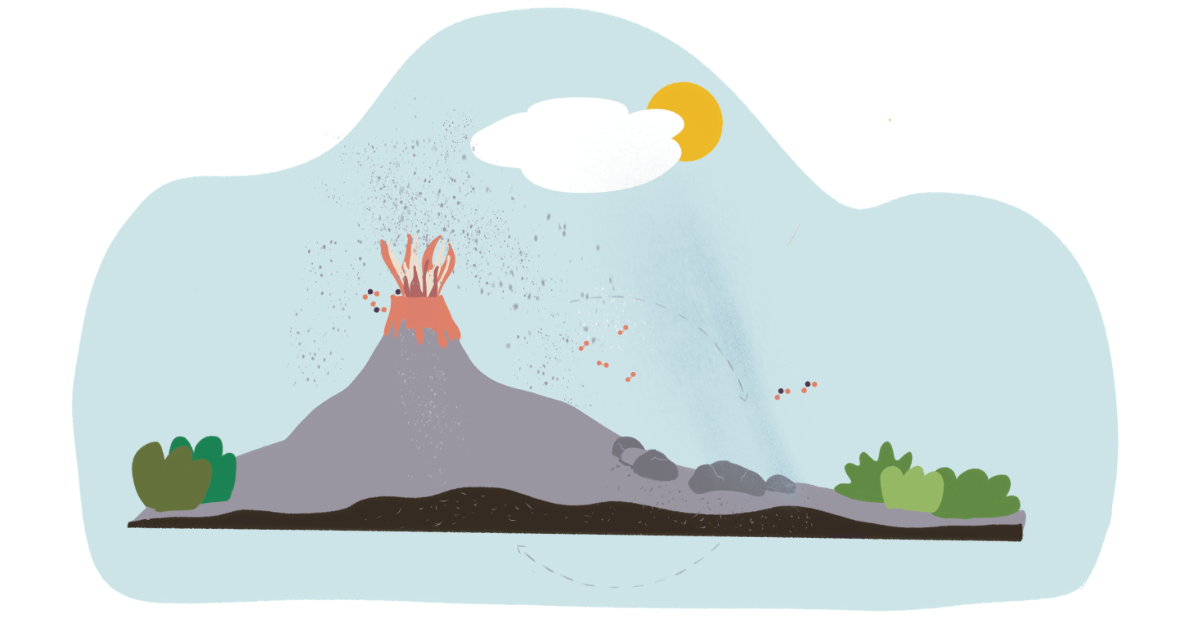
By using fossil fuels, we are rapidly disrupting the slow carbon cycle. Nature cannot keep up with this pace. There are already far too many CO2 particles in the air. There will come a point when our system can no longer handle this. This will set off a chain reaction of disastrous events. Let’s not conduct an experiment on humanity and stop burning fossil fuels as soon as possible.