
2.3 The energy transition
Without systems thinking, you might not see the whole picture. Let’s take the energy transition as an example. We want (and need) to move away from fossil fuels (coal, oil, natural gas), which is why you see all kinds of alternative solutions emerging everywhere around you. One of the models that builders, designers, and homeowners use is the trias energetica model.
A model is always a highly simplified representation of reality. So parts of your elephant are left out. It’s all designed to help you make decisions faster.
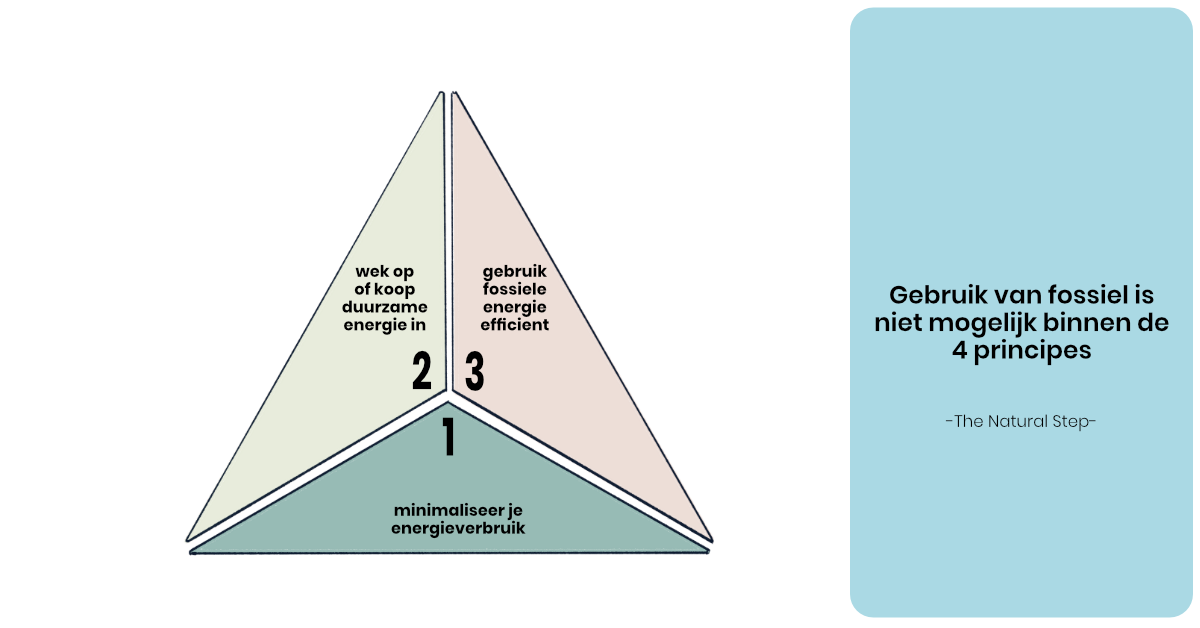
If we were to rely solely on this model, we might inadvertently cause a number of effects that are not sustainable or that even take us further away from our true goal: reducing CO2 emissions.
See below for a few examples of effects that can occur unintentionally.
Unintended effects…
- We start insulating solidly to reduce energy consumption and overlook how much energy it takes to produce, apply and transport all those insulating materials we add.
- As a result, in many cases we add harmful materials that are dangerous to humans and the environment. Consider, for example, formaldehyde which is often used in mineral wool.
- By installing complicated systems that require a lot of change in your behavior, we unintentionally affect the quality of life of residents.
- Finally, we are stuck burning fossil for a long time if insulation and generation have not quite worked out. And that is precisely what we want to say goodbye to.